2D Barcodes
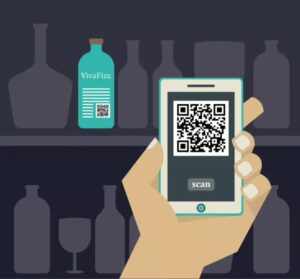
A 2D barcode is a QR code containing your product’s barcode number. Scanned at a checkout, it does the same job as the striped barcode you use now. Scanned by a shopper’s phone, it opens a web page about your product.
That second part is what makes it worth having. For the first time, the code on your packaging can do more than identify your product. It can sell it.
What 2D barcodes do for you
A UPC or EAN barcode encodes one thing: the 12- or 13-digit number, the GTIN. Everything a retailer knows about your product is looked up from that number in their own system. A 2D barcode holds the same GTIN, so the till still works, but it also holds a web address you control.
It gives you space you don’t have. Ingredients, allergens, nutrition, certifications, sourcing, care instructions, recycling and disposal; all of it can live on a page instead of the pack. You stop choosing between the design you want and the text you’re obliged to print.
It reaches someone holding your product. A shopper standing in the aisle with your item in their hand is the most valuable audience you will ever get, and until now you’ve had a few square centimetres to talk to them. A scan can give them the story behind the brand, a recipe, a video of how it’s made, or the answer to the question that would otherwise make them put it back on the shelf.
You can change it after it’s printed. The code points to an address you control, so what sits on the other side can change whenever you like: a seasonal promotion, a corrected detail, a new campaign, a link to wherever you’re selling this month. The pack in the shop stays exactly as printed. What it leads to doesn’t have to: no reprint, no new artwork, no waiting for the next production run.
What else 2D barcodes make possible
You find out what’s happening. Scans can be counted: how many, when, roughly where. A linear barcode tells you nothing at all until a sale turns up in someone else’s system weeks later.
One code can serve several markets. The page can respond to the phone that scanned it, so the same code on the same pack can show a different language or different regulatory information depending on where it’s scanned.
It makes a recall survivable. If you ever need to reach the people holding a particular batch, a code that leads to live information is worth considerably more than a number that leads nowhere.
Retailers are getting ready for 2D barcodes
Major retailers worldwide have committed to a shared target: by the end of December 2027, their checkout systems should be able to read 2D barcodes as well as the striped ones they read today.
It isn’t a law, and it isn’t a requirement placed on you. Nobody will fine you for not having a 2D barcode, and UPC and EAN barcodes will keep scanning long after the date passes. What it does mean is that the infrastructure is arriving regardless. Scanners are being replaced and tills upgraded, and the brands with a code on the pack are the ones who get to use them.
That makes the timing straightforward. Most packaging is redesigned every couple of years anyway, and adding a 2D code at your next refresh costs nothing extra to print. The producers moving now will have a year or two of scan data and a working product page behind them by the time everyone else starts.
Not every QR code is a 2D barcode
A plain QR code is just a link. A checkout scanner has no idea what to do with it.
A 2D barcode for retail is a QR code built with your GTIN embedded in the web address in a structured way. That structure is what allows a point-of-sale system to pull the number out and recognise it as a product.
Both are worth having; they do different jobs. If you only want a link on a poster, a menu or a business card, an ordinary QR code is the right thing and costs less.
What you need first
You need a GTIN: the barcode number already assigned to your product. If you bought barcodes from us, it’s the 12 or 13 digits printed under the bars on the images we emailed you.
Your 2D barcode is generated from that number, so nothing changes about the barcode you already own.
If your product doesn’t have a number yet, start with a retail barcode package. For $39, you can create a single barcode delivered within minutes, and a 2D version whenever you’re ready.
Try a 2D barcode for free
IBN Link supplies our 2D barcodes. They’re part of the International Barcodes Network and offer a free 30-day trial.
Enter your 12- or 13-digit GTIN to generate a working 2D barcode for your product, with a page behind it that you can start building straight away. No credit card needed to start.
Because you can edit the destination page after the pack has been printed, it works as an ongoing subscription rather than a one-off purchase. Their pricing is on their site. Decide not to continue at the end of the trial, and there’s nothing to pay.
Start a free 30-day trial at IBN Link
Before you print your 2D barcodes
- Keep your existing UPC or EAN on the pack as well, at least for now.
- Have the destination page ready before the code goes to press. A code that leads somewhere unfinished is worse than no code.
- Test the printed code, not just the one on your screen. A code that scans on a monitor can still fail on press.
- Check that the destination page works properly on a phone, not just a desktop.
- Ask your retailer whether they have a preference. Some are further along than others.
Still deciding?
Watch the short introduction to 2D barcodes, or email us. We’re a small team, and we answer our own emails, Monday to Friday.
Buy retail barcodes. Every number we sell can be converted into a 2D barcode when you want one.
More information
- The Future of 2D Barcodes: Unlocking Limitless Possibilities
- Enhance Product Packaging with 2D Barcodes: An Informative Guide
- Essential Guide: Creating a 2D Barcode
Frequently Asked Questions
What is a 2D barcode? A QR code with your product’s barcode number inside it. It scans at a checkout like your existing barcode, and opens a web page when a shopper scans it with a phone.
Do I need to replace my UPC or EAN barcode? No. Keep it on the pack. Most packaging carries both during the transition, and linear barcodes will keep scanning for years.
Is a 2D barcode the same as a QR code? Not quite. Every 2D barcode for retail is a QR code, but an ordinary QR code is just a link. A checkout scanner can’t read a product from it. A retail 2D barcode embeds your GTIN in the web address in a structured format.
Do I need a 2D barcode by 2027? No. Retailers have committed to being able to read 2D barcodes by the end of December 2027, but nothing requires you to print one, and no fine applies if you don’t.
Do I need a new barcode number for a 2D barcode? No. It’s generated from the GTIN you already own. If your product doesn’t have a number yet, you’ll need one first.
How much does a 2D barcode cost? There’s a free 30-day trial through IBN Link, with no credit card needed to start. After that, it runs as a subscription because the destination page stays editable after printing. Their pricing is on their site.
Can I change what a 2D barcode links to after it’s printed? Yes, that’s the main advantage. The pack stays as printed; you edit the page it leads to whenever you like.